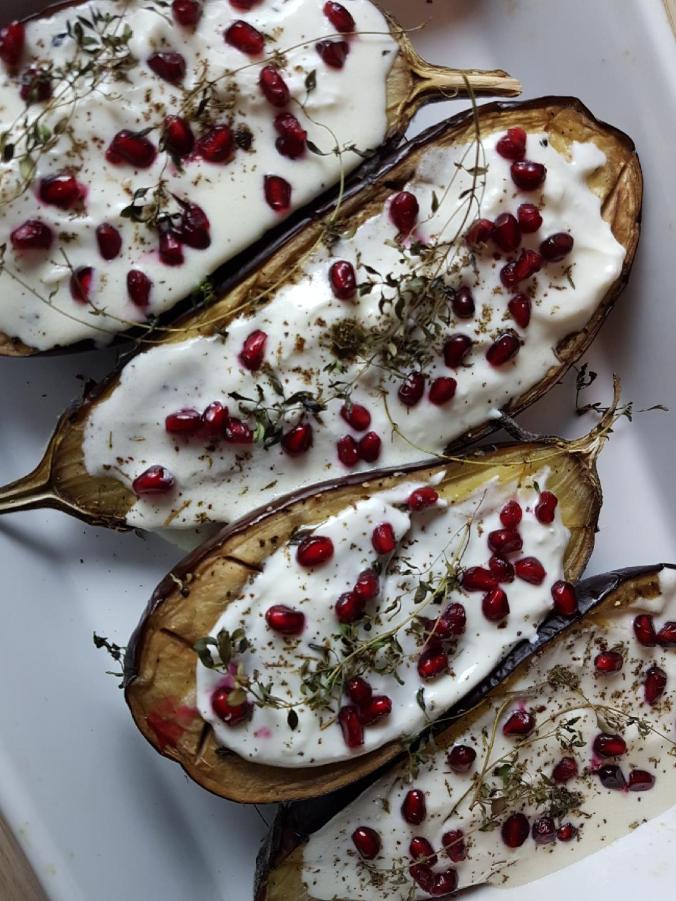
 If you’re one of the few people who is yet to discover Yotam Ottolenghi’s Plenty, you probably think vegetarian food is bland or boring. This book was a revelation for us when we bought a copy many years ago, and we’ve been fans of Ottolenghi ever since. These recipes are deceptive in their simplicity, in that Ottolenghi allows each featured ingredient to shine, but with a subtle complexity of flavor that enlivens the senses and encourages you to reach for a second helping. Try any of these recipes and you won’t be missing the meat.
Ian’s favourite vegetable is eggplant (aubergine), so the eggplant section in our copy of Plenty is well-thumbed and a little sticky, as all good cookbooks should be. Of all the eggplant recipes we know, this is the prettiest! Served with some chunky sourdough or pita bread, this makes a great entrée, or you could serve it as a side dish.
A note about Za’atar: This Middle Eastern term can refer to the herb thyme, or a blend of thyme, sesame, sumac and salt. We enjoy making our own blend and have listed the ingredients below, or you could simply substitute thyme leaves or buy a pre-made za’atar spice mix. If you make the spice mix, you will have much more than you need for this recipe, but it can be used to season anything from bread or potatoes to roasted or grilled chicken.
Ingredients:
- 2 large eggplants
- 80ml olive oil
- 1 ½ tsp lemon thyme leaves, plus a few whole sprigs
- 1 pomegranate
- 1 tss za’atar spice mix
- sea salt and black pepper
Sauce:
- 140ml buttermilk
- 100g Greek yoghurt
- 1 ½ Tbsp olive oil, plus a little drizzle to finish
- 1 garlic clove, crushed
- Pinch of sea salt
Za’atar Spice Mix:
- 1 Tbsp dried thyme leaves, lightly crushed in a mortar and pestle
- 2 tsp sumac
- 1 tsp toasted sesame seeds
- ½ tsp salt
Method:
- Preheat the oven to 200°C/Gas mark 6.
- Cut the eggplants in half lengthways, cutting through the green stalk. Using a sharp knife, make a few incisions in the cut side of each eggplant without cutting through the skin on the other side. Repeat the incisions at a 45-degree angle to create a diamond shaped pattern.
- Place the prepared eggplant halves cut-side up on a baking tray lined with baking paper. Brush them with the olive, continuing to brush until all of the oil has been absorbed. Sprinkle over the lemon thyme leaves and some salt and pepper, and garnish with a few of the lemon thyme sprigs.
- Roast for 35-40 minutes, or until the flesh is very soft and brown. Remove from the oven and cool to room temperature.
- Meanwhile, prepare the pomegranate and sauce. Cut the pomegranate in half horizontally. Hold one half over a bowl with the cut side against your palm, and bash the skin of the pomegranate with a rolling pin or wooden spoon. The seeds should start falling out through your fingers, continue bashing more forcefully until all the seeds are in the bowl. Sift through the seeds to remove any pieces of white skin or membrane.
- For the sauce, whisk together all the ingredients. Taste and adjust the seasoning as needed.
- To serve, spoon a generous amount of buttermilk sauce over the eggplant halves without covering the stalks (the stalks look pretty, but do not eat them!) Sprinkle za’atar and pomegranate seeds across the top and drizzle with some olive oil.

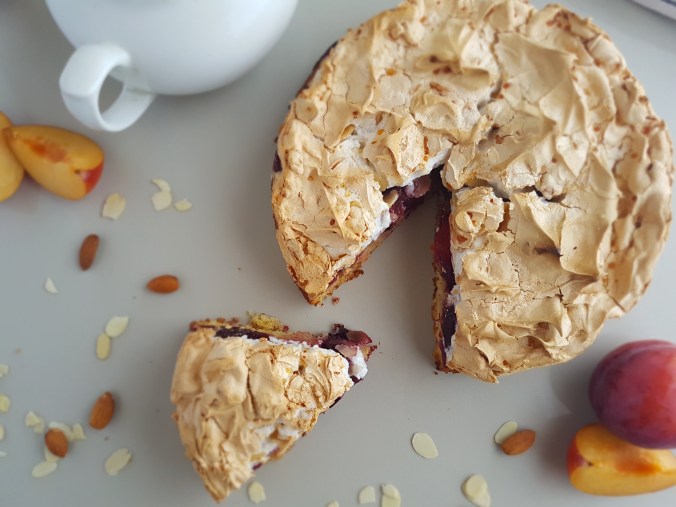 Once again we’re adapting a recipe from Ottolenghi and Goh’s Sweet. They in turn have been inspired by the traditional Louise cake from New Zealand, which is a slice with a cake layer topped with raspberry jam and a coconut meringue. Ottolenghi and Goh’s version uses fresh fruit; you could use any stone fruit which is in season, just be sure it’s ripe but not too soft. We love the addition of flaked almonds to the meringue, as it adds a delicious crunch to the fluffy meringue and syrupy fruit. The cake is fairly rich so you could bake it in a square tin and cut into small squares to serve, or bake in a round tin as we did for a more decadent serving.
 One of our favourite cookbook authors is Anna Jones, whose vegetarian recipes are imaginative, tasty and versatile. We have cooked this recipe a few times, and it’s perfect for an easy weeknight dinner, or a relaxed dinner with friends. We love the way corn is used three ways in this recipe; the spiced popcorn, caramelised corn salsa and corn tortillas. The cayenne pepper adds a nice warm glow to the dish without overpowering the flavours, and the crunch factor of the popcorn makes these tacos extra special. It’s also a fun novelty to serve and always impresses our friends, eve though it’s so easy to make.
 Recipe Road